Mindfulness and Wellbeing: Finding Calm and Resilience in a Busy World
Is your mind always racing, jumping from thought to thought? If so, you're not alone. Research suggests our minds wander nearly half the time, and that this often makes us less happy (Killingsworth & Gilbert, 2010).
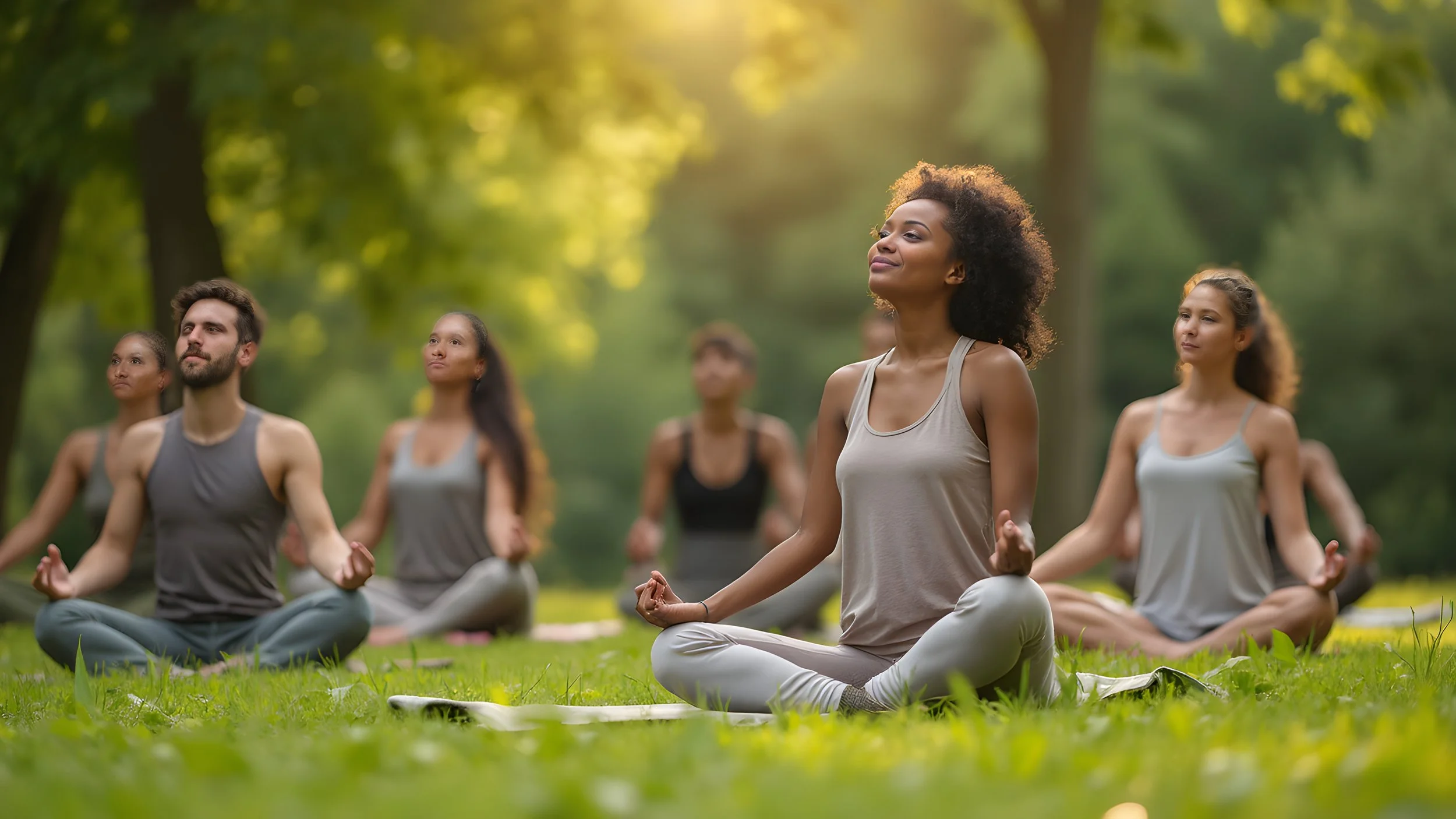
Figure 5. Yoga class outdoors benefits mental health
Note. Photo from Adobe Stock (n.d.).
Mindfulness can offer a powerful solution. At its core, mindfulness is about intentionally paying attention to the present moment without judgement (Galante et al., 2021). Instead of getting caught up in regrets about the past or anxieties about the future, mindfulness encourages you to notice your thoughts, feelings, and sensations as they happen. Practising mindfulness regularly can help you reduce stress, feel calmer, and enjoy life more fully (Galante et al., 2021; O’Connor et al., 2023).
Why Mindfulness Makes a Difference
Mindfulness practice provides your mind with a much-needed break from constant mental chatter. Studies show that practising mindfulness or meditation can lower feelings of anxiety and depression, while boosting positive emotions and overall life satisfaction (Galante et al., 2021; O’Connor et al., 2023). Mindfulness training also enhances psychological resilience, making it easier to cope with life's inevitable challenges (O’Connor et al., 2023). Even brief daily mindfulness exercises can lead to noticeable emotional improvements, creating a lasting impact on your mental health and wellbeing (Beard, 2025).
Mindfulness doesn't just change your mood. It can physically alter your brain and body. Brain imaging studies of regular meditators show notable changes: mindfulness increases grey matter in areas associated with memory, emotional regulation, and empathy (Calderone et al., 2024). Moreover, mindfulness practice reduces activity in the amygdala, the brain's stress-response centre, enabling calmer responses to stress (Calderone et al., 2024). Practising mindfulness also lowers cortisol levels, the stress hormone, and even reduces inflammation in the body, contributing to overall better health and reduced risk of chronic illness (Calderone et al., 2024; Michaelsen et al., 2023).
Accessibility and Simplicity
One of the best aspects of mindfulness is its accessibility. You don't need special equipment or a specific setting; just a willingness to pause and pay attention. Mindfulness is increasingly being incorporated into workplaces, schools, and healthcare settings to help manage stress and enhance wellbeing (Michaelsen et al., 2023). Meditation apps and group mindfulness sessions can provide valuable support and encourage regular practice (Galante et al., 2021). Unlike many wellness trends, mindfulness is straightforward, cost-free, and offers genuine, scientifically-backed benefits.

Figure 6. Relaxed woman resting on the grass
Note. Photo from Adobe Stock (n.d.).
Ready to experience mindfulness yourself?
Here's a simple, one-minute mindful breathing exercise you can practice anywhere to help reset your mind (Puddicombe, 2012; Galante et al., 2021):
Get Comfortable: Find a quiet spot to sit comfortably, either on a chair or the floor. Close your eyes gently, or focus softly on a fixed point.
Focus on Your Breath: Inhale slowly and deeply through your nose, feeling your lungs and abdomen expand. Then exhale slowly through your mouth or nose. Continue breathing naturally and focus your attention solely on each breath. You can silently note "breathing in" and "breathing out" to maintain focus (Puddicombe, 2012).
Andy Puddicombe. All it takes is 10 mindful minutes (TED, 2012). Video online
Acknowledge Wandering Thoughts: It's natural for thoughts to arise, perhaps about tasks you need to finish or plans for later. Whenever you notice your mind drifting, gently bring your focus back to your breath. Do this without judgement or frustration; each time you redirect your attention, you're effectively strengthening your mindfulness muscles (Puddicombe, 2012; Galante et al., 2021).
Reflect and Notice: After about one minute, slowly open your eyes and reflect on how you feel. Many people find even a short mindfulness exercise leaves them feeling calmer, clearer, and more centred (Puddicombe, 2012). The first time I tried it, I was pleasantly surprised that just one brief minute made my mind feel so much calmer. How about you?
This brief exercise acts like a mental reset button, helping you quickly return to a calm and centred state. Regular practice helps train your brain, making it easier to remain calm during stressful situations (Galante et al., 2021; Michaelsen et al., 2023). Over time, extending this practice from one minute to five, ten, or twenty minutes daily can significantly enhance your mental clarity, emotional resilience, and overall happiness.
Remember, mindfulness isn't about emptying your mind, a common misconception. Instead, it's about observing your thoughts without becoming overly attached or carried away. By approaching your inner experiences with curiosity and kindness, you cultivate greater emotional balance, enhanced focus, and lasting mental wellbeing. Start small, stay consistent, and watch how mindfulness gradually transforms your everyday experiences.
References
Adobe Stock. (n.d.). Yoga class outdoors benefits mental health. Physical wellness routines improve mood and reduce stress. Nature enhances relaxation during yoga sessions. Community support boosts mental well-being. [Photograph]. Retrieved from https://stock.adobe.com/au/images/yoga-class-outdoors-benefits-mental-health-physical-wellness-routines-improve-mood-and-reduce-stress-nature-enhances-relaxation-during-yoga-sessions-community-support-boosts-mental-well-being/1258615791
Adobe Stock. (n.d.). Relaxed woman resting on the grass [Photograph]. Retrieved from https://stock.adobe.com/au/images/relaxed-woman-resting-on-the-grass/600118388
Beard, M. (2025, February 14). You can actually change the brain waves involved in depression and anxiety with this trick. New York Post. https://nypost.com/2025/02/14/health/meditation-changes-brain-waves-linked-to-anxiety-depression
Calderone, A., Latella, D., Impellizzeri, F., Pasquale, P. de, Famà, F., Quartarone, A., & Calabrò, R. S. (2024). Neurobiological changes induced by mindfulness and meditation: A systematic review. Biomedicines, 12(11), 2613–2613. https://doi.org/10.3390/biomedicines12112613
Galante, J., Friedrich, C., Dawson, A. F., Modrego-Alarcón, M., Gebbing, P., Delgado-Suárez, I., Gupta, R., Dean, L., Dalgleish, T., White, I. R., & Jones, P. B. (2021). Mindfulness-based programmes for mental health promotion in adults in nonclinical settings: a systematic review and meta-analysis of randomised controlled trials. PLOS Medicine, 18(1), e1003481. https://doi.org/10.1371/journal.pmed.1003481
Killingsworth, M. A., & Gilbert, D. T. (2010). A wandering mind is an unhappy mind. Science, 330(6006), 932. https://doi.org/10.1126/science.1192439
Michaelsen, M. M., Graser, J., Onescheit, M., Tuma, M. P., Werdecker, L., Pieper, D., & Esch, T. (2023). Mindfulness-based and mindfulness-informed interventions at the workplace: A systematic review and meta-regression analysis of RCTs. Mindfulness, 14(3), 574–589. https://doi.org/10.1007/s12671-023-02130-7
O’Connor, M., Stapleton, A., O’Reilly, G., Murphy, E., Connaughton, L., Hoctor, E., & McHugh, L. (2023). The efficacy of mindfulness-based interventions in promoting resilience: A systematic review and meta-analysis of randomised controlled trials. Journal of Contextual Behavioral Science, 28. https://doi.org/10.1016/j.jcbs.2023.03.005
Puddicombe, A. (2012, November). All it takes is 10 mindful minutes [Video]. TED Conferences. https://www.ted.com/talks/andy_puddicombe_all_it_takes_is_10_mindful_minutes
